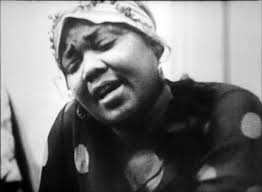
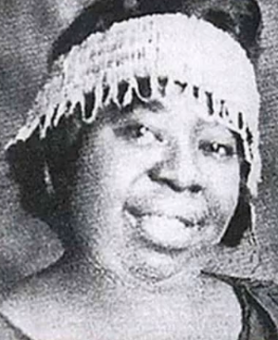
Bessie Smith, “The Empress of the Blues,” gave voice the listeners’ tribulations and yearnings of the 1920s and ’30s.
For me Bessie Smith was always in my ear and a teacher. I had been hearing her voice all my life and then I discovered some of the songs in this act and found hers that fit. I was overjoyed to be able to use some of the music she sang and in some cases, wrote on the stage using my voice. She has always been a leading inspiration in my life and I am so glad she is still inspiring me. There is much on line about her as well as a great book and a well-made film starting Queen Latifah. All information below and a short bio here from ALL MUSIC.
Artist Biography by Scott Yanow – All Music
The first major blues and jazz singer on record and one of the most powerful of all time, Bessie Smith rightly earned the title of “The Empress of the Blues.” Even on her first records in 1923, her passionate voice overcame the primitive recording quality of the day and still communicates easily to today’s listeners (which is not true of any other singer from that early period). At a time when the blues were in and most vocalists (particularly vaudevillians) were being dubbed “blues singers,” Bessie Smith simply had no competition.
Back in 1912, Bessie Smith sang in the same show as Ma Rainey, who took her under her wing and coached her. Although Rainey would achieve a measure of fame throughout her career, she was soon surpassed by her protégée. In 1920, Smith had her own show in Atlantic City and, in 1923, she moved to New York. She was soon signed by Columbia and her first recording (Alberta Hunter‘s “Downhearted Blues”) made her famous. Bessie Smith worked and recorded steadily throughout the decade, using many top musicians as sidemen on sessions including Louis Armstrong, Joe Smith (her favorite cornetist), James P. Johnson, and Charlie Green. Her summer tent show Harlem Frolics was a big success during 1925-1927, and Mississippi Days in 1928 kept the momentum going.
However, by 1929 the blues were out of fashion and Bessie Smith‘s career was declining despite being at the peak of her powers (and still only 35). She appeared in St. Louis Blues that year (a low-budget movie short that contains the only footage of her), but her hit recording of “Nobody Knows You When You’re Down and Out” predicted her leaner Depression years. Although she was dropped by Columbia in 1931 and made her final recordings on a four-song session in 1933, Bessie Smith kept on working. She played the Apollo in 1935 and substituted for Billie Holiday in the show Stars Over Broadway. The chances are very good that she would have made a comeback, starting with a Carnegie Hall appearance at John Hammond‘s upcoming From Spirituals to Swing concert, but she was killed in a car crash in Mississippi. Columbia has reissued all of her recordings, first in five two-LP sets and more recently on five two-CD box sets that also contain her five alternate takes, the soundtrack of St. Louis Blues, and an interview with her niece Ruby Smith. “The Empress of the Blues,” based on her recordings, will never have to abdicate her throne.
Looking forward to singing the song above and will be excited to see what that brings the act.
Just watched this documentary and am very happy I did. Very good and it shows so much about her ad a person! Its available to watch on YOUTUBE or on Amazon.
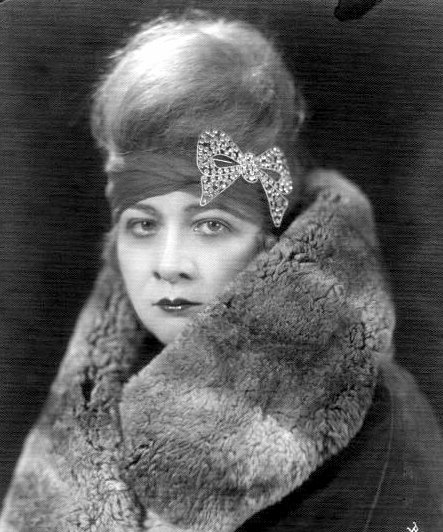
There is so much on line about Sophie Tucker on line and in books! A few links below too.
SOPHIE’S BIOGRAPHY
Born Sonya Kalish to a Jewish family en route to a new life in America from Tsarist Russia in 1887, Sophie Tucker would become one of the greatest and most beloved entertainers of the 20th century.
The singer, comedian, TV, film and radio personality grew from humble roots in Hartford, Connecticut where her family appropriated the last name Abuza and opened a restaurant. In addition to helping maintain the family business, Sophie began singing for tips at an early age and discovered her powerful voice and innate knack for entertaining.
At 16, Sophie married local heartthrob Louis Tuck (from whom she would derive her famous last name) and soon after gave birth to her son, Bert. The rocky marriage and jump into motherhood exposed Sophie to a bleak future ahead if she chose to stay close to home and abandon her theatrical dreams. With heartbreaking determination, Sophie left her child to be raised by her younger sister, Anna and left Hartford for New York City. With just $90 in her pocket, Sophie was determined to make a name for herself and find success that would allow her to give back to her beloved family.
The harsh reality of roughing it in New York didn’t faze the ingénue and, after pounding the pavement and pinching pennies, Sophie eventually found work performing vaudeville and burlesque tunes in local establishments. However, being pegged “too fat and ugly” to perform as herself, Sophie was restricted to performing in blackface as a “coon shouter.” While she made a name for herself with this act, a happy accident which left her without her makeup kit one day in 1909 forced Sophie to go on stage naturally – that is, as natural as a full-figured girl in a sequined ball gown and golden curls can be. The crowd adored the real Sophie, and though the disguise was gone for good, she would continue to draw on ragtime, blues, and jazz influences, which were primarily African American genres at the time.
After a brief but acclaimed stint in the legendarily extravagant Ziegfeld Follies, Sophie gained traction that would send her on the road until her death from lung cancer in 1966. Amassing an extraordinary fan base, Tucker enjoyed the success of many popular recordings, most notably including My Yiddish Momme and Some of These Days, the latter of which became the title of her 1945 autobiography. Sophie appeared in several films during her lengthy career, including one of the first “talkies,” Honky Tonk, in 1929, and alongside Judy Garland in 1937’s Broadway Melody of 1938.
Deemed “The Last of the Red Hot Mamas,” Tucker was adored for her candor, bold sense of humor, powerful voice, and unwavering energy as a performer and as a woman. Sophie never fit the typical Hollywood beauty mold, but presented herself and her body in an empowering way that shut down any preconceptions or superficial standards.
Sophie continues to be celebrated as a groundbreaking entertainer and transcendent example of the American dream.
Thought I’d share. Great documentary about some strong and talented ladies. I sing some of their songs and can still feel the power and fun in every lyric. When I sing this music its like they are singing through me it makes sense. They were strong and powerful women their power lingers in the art they created.
Enjoy.
https://vimeo.com/channels/framelinevoices/81826291
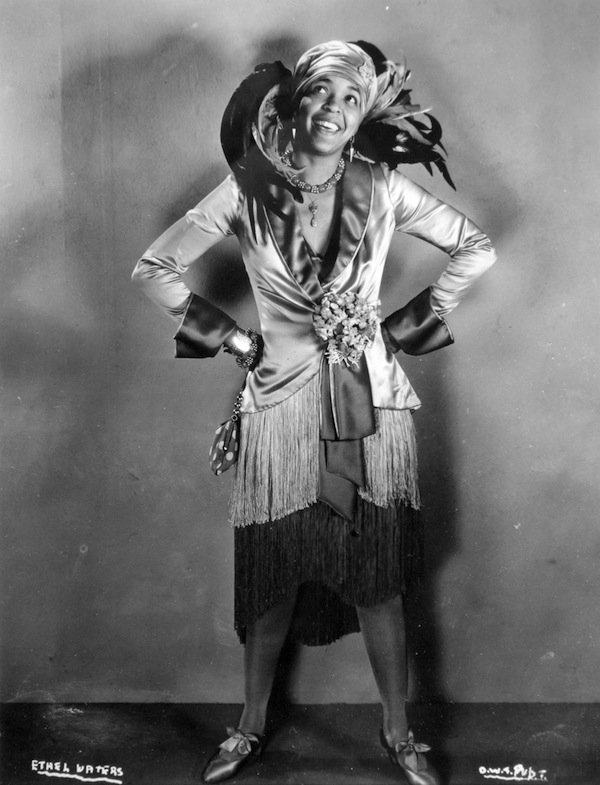
T’Ain’t Nobody’s Bizness exposes the triply oppressed (black, female, queer) pioneers of blues through interviews with cultural historians, vintage photos, footage, and recordings, all narrated by Jewelle Gomez. With lavish costumes and sexually suggestive lyrics, bisexual and lesbian singers such as Ma Rainey (got arrested for indecency at an all-girl party—while married to a man) and Gladys Bentley (a “bulldagger” in full tuxedo) were regularly shunned by the church and society for their rough and tumble ways. Like Frameline Voices? Donate here: http://bit.ly/FramelineDonate
Robert Philipson 2011 29 min. USA
Recently Granny’s Blue-Mers has had a change of musicians.
This was an Interesting test of my connection to the reason I do this work. There were some that wanted to rush, push and prod me to make money doing this show or to change it in ways that would highlight them and aid them in making more money in other places. There was one in particular who said things to me like, “I am not your Goddamned friend Mary, you’re supposed to get me money not talk to me!” Now, there’s nothin wrong with money honey but I think when that is all one plays for or sings for or teaches for one becomes a shell of the artist one is or could be. There has to be fulfillment too.
I believe that art is collaborative. I like working with others and I like that camaraderie and support.
Now, I have people around me that respect the work we do and yes they want money too, we all need to live but its a different feeling. Now, I have people like me that respect themselves and the music and the people who wrote it. They as I do, respect the audience too and not just to earn money. Together I feel we can make darkness disappear in the lives of those that honor us with their presence in our theater, if only for a short time. That’s what this is all for.
This gift of being on the stage comes with it huge responsibilities and not everyone is really made to carry them. I do it for love. I do it to heal my audience and myself, I do it for art and exploration and to sing the songs of the past that my Granny might have heard or sung in her youth. She would have laughed so hard at my songs! I named this group for her!
I do it to bring back voices,ideas and beauty that has been buried under commercialism. I am free now of the chains I let others wrap me in.
Come on down hear us and come and laugh and enjoy the night with us. We have so few laugh filled nights to look back on don’t we?
We are a tiny thing in the big picture but we all are aren’t we?
Let us fill you with smiles and light. That’s our job.
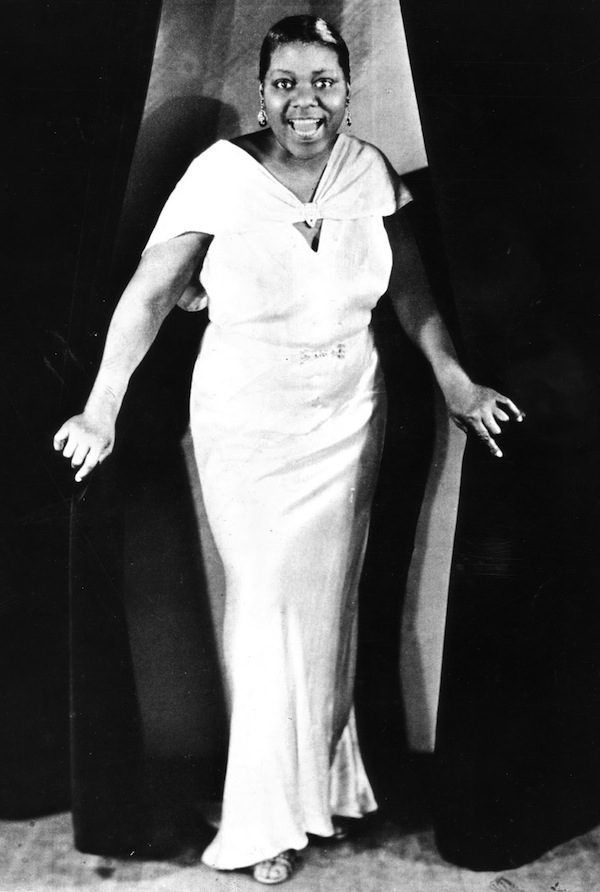
One day I found and anthology of Dirty Blues and I was hooked! Many of the songs I do in this act are by Lil Johnson. Not sure who she was or if this picture is her but it’s all that’s out there. Information in the articles below are from several sources and you can follow links to the others she worked with as well. Please go to the discography portion and take a listen to the music she recorded. Many others have covered them. I aim to do her justice when I do! I am pretty sure she was a great performer and comedienne as well as a powerful singer. I am also pretty sure her stage name was an inside joke too!– Rev. Mary
Click below to hear me live with a great amount of amazing blues and swing musicians on the “porch” at Agusta Blues and Swing Week.
Lil Johnson made use of one thing that always sells in music, every time: sex.
She eventually toned down her lyrics somewhat, since record company censorship was beginning to plague her as well as shifting public taste. Nonetheless, she recorded quite a few sides between the late ’20s, when she first appeared in the recording studios, and 1937, when she performed on her last known songs. Like many pianists and singers from this period, her recordings fell into a state of copyright limbo in which just about anyone capable of sequencing a series of tracks was able to release her songs on anthologies relating to the blues and boogie-woogie piano. There was a particular interest in Johnson‘s case among producers of collections such as Copulatin’ Blues, a title that apparently seems appealing enough to be used for several different collections by unrelated labels. Song titles such as “You’ll Never Miss Your Jelly Till Your Jelly Roller Is Gone” reveal how appropriate her material is to such collections, although she never really made up her mind which direction she wanted to go into with the food-equals-sex metaphors; at one point switching from jelly rolls to peanuts — “Get ‘Em From the Peanut Man,” the listener is advised — and eventually settling on something that is actually healthy, cabbage. “Anybody Want to Buy My Cabbage?” Johnson asks on this side, one of several of her records in which the solid feel of the rhythm and the peskiness of the blues improvisations make up for relatively uninspired lyrics.
Her origins and early life are not known. She first recorded in Chicago in 1929, accompanied by the pianists Montana Taylor and Charles Avery on five songs, including “Rock That Thing”. She did not return to the recording studio until 1935, when her more risqué songs included “Get ‘Em from the Peanut Man (Hot Nuts)”, “Anybody Want to Buy My Cabbage?”,[1][2] and “Press My Button (Ring My Bell)” (“Come on baby, let’s have some fun / Just put your hot dog in my bun”).[3] She also recorded a version of “Keep A-Knockin’“, which later became a hit for Little Richard.
From her second session onwards, she formed a partnership with the ragtime-influenced pianist Black Bob, who provided ebullient support for her increasingly suggestive lyrics. In 1936 and 1937, she recorded over 40 songs, mostly for Vocalion Records, some featuring Big Bill Broonzy on guitar and Lee Collins on trumpet. Her other songs included “Was I?”, “My Stove’s in Good Condition”, “Take Your Hand Off It” and “Buck Naked Blues“.
She sang in a vigorous and sometimes abrasive manner. All her songs have been anthologized on later blues collections. There is no record of what became of Johnson after her recording career ended in 1937.
AllMusic Review by Scott Yanow
All the recordings by the good-time blues singer Lil Johnson have been reissued on three Document CDs. Virtually nothing is known about Johnson outside of the recordings that she made. Vol. 1 starts off with five numbers from 1929, in which she is backed by either Montana Taylor or Charles Avery on piano (with Tampa Red sitting in on “House Rent Scuffle”). Otherwise all of this music is from 1935-36, with Johnson usually accompanied by pianist Black Bob and various bassists, plus, on two numbers, guitarist Big Bill Broonzy. Her best-known number, “Get ‘Em From the Peanut Man (Hot Nuts),” is here (in three different versions), along with such other rollicking tunes as “Anybody Want to Buy My Cabbage,” “If You Can Dish It (I Can Take It),” “Press My Button (Ring My Bell (Yanow, n.d.)l of the recordings by the good-time blues singer Lil Johnson have been reissued on three Document CDs. Virtually nothing is known about Johnson outside of the recordings that she made. Vol. 1 starts off with five numbers from 1929, in which she is backed by either Montana Taylor or Charles Avery on piano (with Tampa Red sitting in on “House Rent Scuffle”). Otherwise all of this music is from 1935-36, with Johnson usually accompanied by pianist Black Bob and various bassists, plus, on two numbers, guitarist Big Bill Broonzy. Her best-known number, “Get ‘Em From the Peanut Man (Hot Nuts),” is here (in three different versions), along with such other rollicking tunes as “Anybody Want to Buy My Cabbage,” “If You Can Dish It (I Can Take It),” “Press My Button (Ring My Bell),” and “Sam the Hot Dog Man.” Fun music.













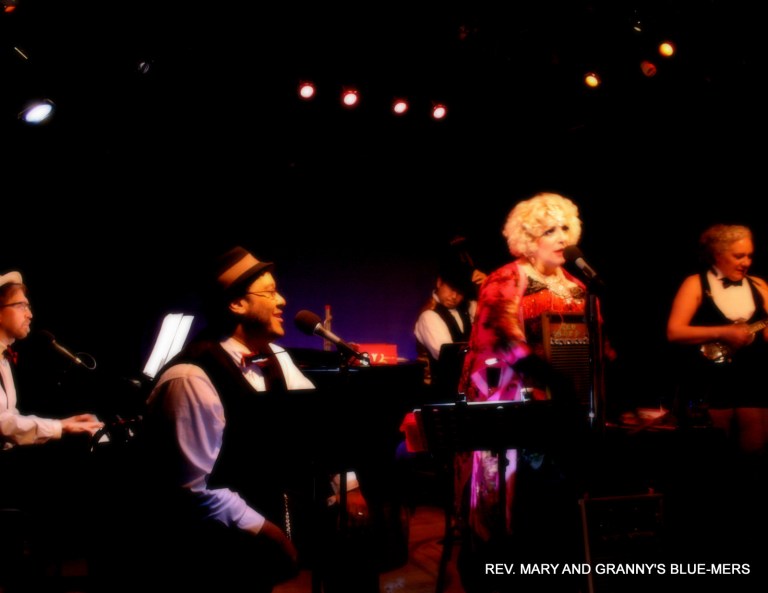


 Rev. Mary Whitebush "THE RED HOT MAMA" & Granny's Blue-Mers
You must be logged in to post a comment.